Archive for the 'Pointy Town' Category

Page 2 of 4

Being A True Account Of The Discovery Of The Tomb Of Anaxagrotax

Be it known that on the fourteenth day of the month of March in the year of picklings last, MR THUBB, the Hon. Secretary of the Pointy Town chapter of the Tuesday Weld Fan Club, hired a charabanc for the purposes of an excursion to outlying parts of the said town, there to picnic and exchange pictorial collector’s cards of Tuesday Weld, her contemporaries and her peers.

That the driver of the charabanc was a man of frightful countenance and evil reputation. That he was said to have phantom limbs, additional to his given limbs, and that though these could not be perceived by the human eye in ordinary daylight, they were nevertheless present, and said driver might be said to have the form of a gigantic spider were he ever seen whole.

That the cost of the hire of the charabanc and driver was met by subscription to the excursions and picnicking fund of the Tuesday Weld Fan Club, administered by the Hon. Treasurer MR BRIMSTONE. That MR THUBB and MR BRIMSTONE were at loggerheads by cause of imponderables and fathomless mysteries known to none but they and their wives and the late beadle, MR FLAIL, perished of an ague in the month of February past. That the relict of MR FLAIL was confined to a madhouse wherein she did knit, in a phrenzy, in all her hours of wakefulness.

That the charabanc driver, by name BINNS, having agreed a route to the picnicking spot with MR THUBB, did diverge his vehicle up into the hills, whence his intention was to deliver all the excursioning members of the Tuesday Weld Fan Club into the clutches of the Grunty Man, who dwelt in a lair in said hills. That BINNS was to gain no pecuniary advantage from this treachery, in that his sole purpose was mischief and malfeasance. That the babblings of the excursionists within the charabanc excited them to such degree that none took cognizance of the divergence.

That much frost and ice lay on the roads in that month of March for it was a bitter season. That there was no grit to be had nor wherewithal of Pointy Town civic gritting persons to spread it upon the roads if there had been, for they were in dispute with regard to their stipend and held banners in a throng outside the civic hall and had tubs which they thumped with main force. That notwithstanding his great merit as a driver of the charabanc, BINNS caused the vehicle to skid ski-skaw-skoo off the appointed way and go plunging into a ditch some four miles as the crow flies past the Bypass at Blister Lane. That had BINNS taken the route agreed with MR THUBB such accident would never have occurred.

That the gentlemen and ladies of the Tuesday Weld Fan Club conducted themselves with decency and aplomb. That those who had been hurled from the charabanc assisted those who remained within its twisted wreckage to make their escape. That they gathered in the ditch and sipped with due daintiness from flasks of soup piping hot. That the Hon. Correspondence Secretary, MRS GLEETY, distributed to all Dr Gillespie’s Famous And Trustworthy Brain Powders For The Alleviation Of Disorders Of The Nerves And Integuments. That tears of emotion were shed when it was seen that MR THUBB and MR BRIMSTONE were putting aside their differences in the face of calamity and were shaking hands with each other with manly forbearance.

That a considerable time elapsed before it was noted that the charabanc driver BINNS was not present with the others in the ditch. That said BINNS had taken to his heels at the first opportunity. That his fleeing gained much expedition from the fact that his visible heels were accompanied by any number of phantom heels. That the direction of BINNS’ fleeing was into the hills, where he threw himself upon the mercy of the Grunty Man with terrible bewailings that he had failed in his appointed task. That the Grunty Man was a stranger to mercy and grunted loud and awful grunts and dragged BINNS into the depths of his lair. That not hide nor hair of BINNS was ever seen again on this spinning earth.

That the composure of the members of the Tuesday Weld Fan Club was a magnificent thing and a pride unto Pointy Town. That when wounds were bandaged and shattered bones set with splints, they clambered forth each and every one from the ditch to make the journey home on foot. That night fell and they lost their way yet did not once screech in terror nor complain of chill. That they kept their spirits up by calling one to another the titles of feature films in which Tuesday Weld had appeared, to which another would respond by calling out the name of the character she had played in said feature film, so that MR BRIMSTONE might call Rally ‘Round The Flag, Boys! and MRS GLEETY call Comfort Goodpasture, or MR THUBB call The Private Lives Of Adam And Eve and the Hon. Picnics Secretary MRS BLEARS call in return Vangie Harper.

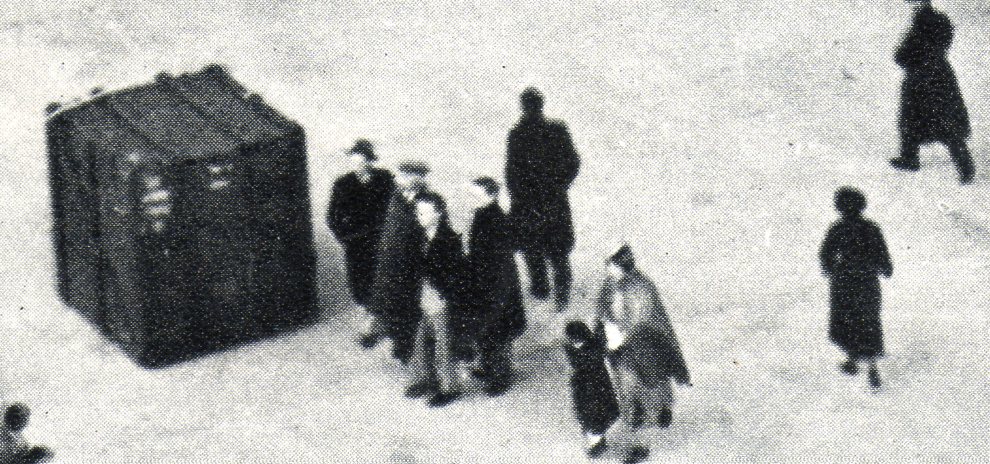
That such jollies were brought cruelly to a close when it happened in the darkness that MR THUBB collided with an enormous block of masonry and was knocked insensible. That MRS GLEETY had exhausted her supply of Dr Gillespie’s Powders but was able to revive MR THUBB with a draught of arquebusade-water from a canister within her handbag. That it was resolved to remain in the lee of the enormous block of masonry pending the break of dawn, for it provided some shelter from a wild wind which now was roaring. That to pass the time until dawn, the excursionists hummed tunes made famous by Dudley Moore and Pinchas Zukerman, respectively the second and third husbands of Tuesday Weld.

That when dawn came and examination was made of the masonry it was found to be covered in greatly mysterious inscriptions in an alphabet unknown to even the most erudite member of the Tuesday Weld Fan Club. That this was by common acclaim MR SHAMBEKO who was the author of many learned books, among them being a history of Pointy Town, a topographical description of the area around the Blister Lane Bypass, and a shot-by-shot analysis of the feature film I’ll Take Sweden, in which Tuesday Weld appeared as the character JoJo Holcomb. That in scraping clumps of mud from the masonry the better to view the inscriptions, it became apparent that much of the block remained submerged below the ground. That MRS GLEETY produced from her handbag a number of gardening trowels which she carried on the aborted excursion in case within the vicinity of the picnic spot had grown such plants as campions and hellebore and lupins for the digging up and transplanting to her garden behind the house on Turpentine Boulevard in Pointy Town. That those of the party not yet faint with exhaustion set to with a will a-trowelling away the mud to reveal as much of the enormous block of masonry as their efforts might allow.

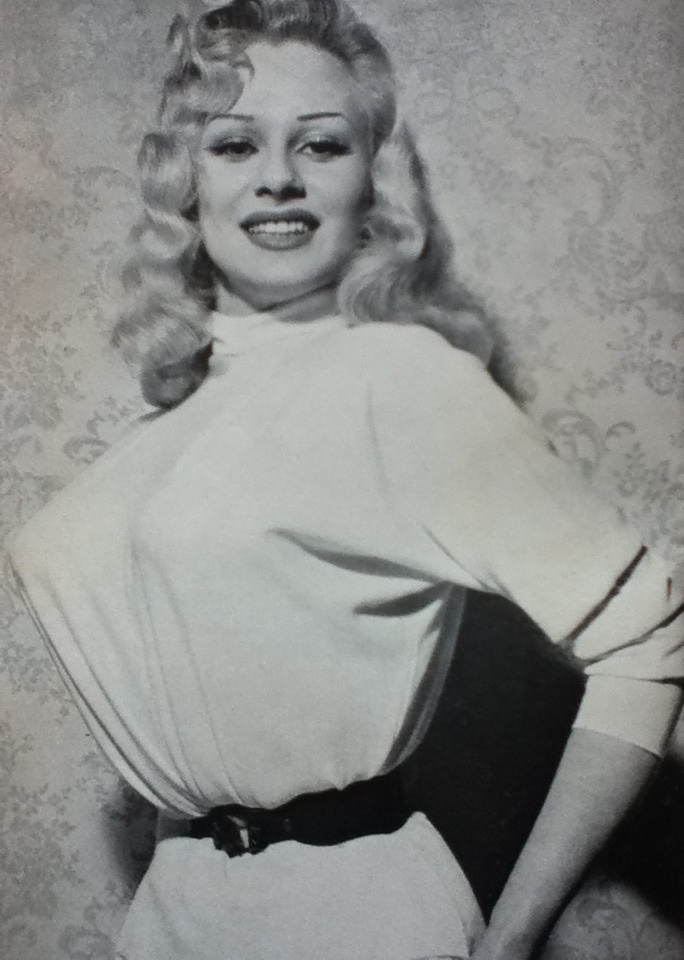
That thus was discovery made of the ancient tomb of Anaxagrotax. That MR SHAMBEKO thereafter wrote an account of the discovery and embarked upon an extensive lecture tour of many countries. That MR SHAMBEKO never failed to acknowledge the inadvertent part played by the evil spidery charabanc driver BINNS. That it remains unknown who or what Anaxagrotax was or in what era he lived if ever he lived at all. That his tomb now gleaming is surrounded by a fence to deter souvenir hunters, and that propped against the tomb, in a plain wooden frame coated with protection against the elements is a publicity photograph of Tuesday Weld, taken circa 1963 during production of the feature film Soldier In The Rain, in which she appeared as the character Bobby Jo Pepperdine. That it is apt that a soldier stands guard in a sentry box beside the tomb of Anaxagrotax, and that it is raining, and that there is no roof upon the box, so the rain falls directly upon the soldier, whose badge declares his name as Private Pepperdine.

Sick Amid The Blossoms

“O Dobson thou art sick! Thou art sick amid the blossoms! O what shall we do? What shall we do? Let thy pamphlets be our guide!”

This was the little recitation made, oh so plaintively, by a band of hiking orphans who stumbled upon a sick and feverish Dobson in a blossom-bestrewn field one morning in 1956. Orphan hikes were a short-lived social phenomenon of the decade, one which is almost forgotten today. Inspired by the Swiss film masterpiece The Hiking Orphans, children all across the land gathered into groups and went marching off o’er hill and dale, munching toffee apples and consulting extensively detailed maps. So popular did the hikes become that many of the tots taking part were not actually orphans at all. Some became dab hands at forging death certificates, others suffocated mama and papa in their beds, or poisoned their breakfast cereal.

Dobson became a sort of patron saint of the orphan hikers following publication of his pamphlet My Parents Are Dead, But Christ!, I Adore Hiking (out of print). Because of the blasphemous abuse of the Lord’s name in the title, the pamphlet was swiftly banned and the print run pulped, but such was the demand from hiking tinies that illegal Gestetnered copies were soon circulating, often secreted in the folds of the extensively detailed maps the orphans carried in waterproof pouches strung from lanyards around their scrawny necks.

These maps were themselves a marvel, more extensively detailed than any other maps ever made. It was said that the most extensively detailed of them showed the precise alignment of chaffinches perched on the branches of an aspen you would pass if you bore left at the hedge in which a rusted farm implement had been shoved and abandoned.

Unusually, Dobson’s pamphlet included an illustration of the great man, a linocut by the hyperrealist linocutter Rex Hyper which showed the pamphleteer’s visage in breathtaking hyperrealism. So familiar was his face to the more indefatigable orphan hikers, who pored over it whenever they sat down on a log to rest, that when a band of them came upon the sick and feverish figure sprawled amid the blossoms, they instantly recognised him as Dobson. Hence their plaintive recitation. Let us parse it.

“O Dobson thou art sick!”

The orphans are making it plain that they recognise the crumpled invalid for who he is, and they recognise, too, that unlike the blossoms amid which he languishes, he is far from blooming. We might criticise them for not being more specific in their diagnosis of his ague, but ought to remember that they are mere tots, and orphaned tots at that, except for the one called Vincenzo, who is a fraudulent orphan, having used his pocket money to purchase a counterfeit newspaper cutting claiming his ma and pa perished in an avalanche.

“Thou art sick amid the blossoms!”

By repeating their declaration of the pamphleteer’s medical condition, the orphans reinforce its seriousness. This is no fugitive swoon nor spasm, they are saying, nor is Dobson lying there with his limbs splayed out because he has simply tripped upon a clump. And having driven home the point, they go on to place it in a geographical location – “amid the blossoms”. If an air ambulance is coptering in the vicinity, equipped with fantastic sound detection technology calibrated to pick up piping orphan voices, they have pitched their recitation superbly. But of course, in 1956 such air ambulances were rare, and rarer still those with fantastic sound detection technology calibrated to pick up piping orphan voices. And the chances of one hovering in range of the blossom-bestrewn field in which Dobson lies crumpled are so remote as to be not worth a fig. Tiny they may be, but the orphans know this, and thus the despair of the next line.

“O what shall we do?”

We may be brave and doughty hikers, they say, we may be free from our often repressed and oppressive parents, God rest their souls, except for Vincenzo’s, obviously, yet we are still but fragile and vulnerable tinies, and faced with this dramatic medical emergency we are beflummoxed and in some cases about to burst into tears.

“What shall we do?”

The repetition here is a pleasing echo of the repetition of “thou art sick” in the opening lines. It also commands our attention. The orphan hikers are not larking about. They are confronting, probably for the first time in their lives, a mortal dilemma. Toughened as they are by their hikes, well able to ford streams and negotiate bramble patches and vault dry stone walls and run screaming from flocks of savage angry swans, they are not so tough that they can cope with the sight of a sick and feverish pamphleteer amid the blossoms. Well, Vincenzo can, because he is, let’s say, an interesting little chap. The way in which his voice drops out of the recitation for this pair of lines lends an added harmonic jouissance, if one is listening with due care.

“Let thy pamphlets be our guide!”

Vincenzo’s voice returns for this triumphant ending. There is renewed hope. Medically ignorant and lacking such kit as bandages and tablets and proprietary nerve tonics, the orphans have one invaluable resource – the stricken pamphleteer’s own pamphlets! For all of them, their imaginations sparked by Dobson’s illegal pamphlet on hiking, have each acquired their own little collection of his works, which they carry with them wherever they hike. They realise that by taking all their Dobson pamphlets out of their pouches and combing through the texts, they are bound to alight upon a passage absolutely pertinent to the situation. As the pamphleteer himself continues to groan amid the blossoms, the orphans end their recitation on this note of optimism.

So there we have the words in context. What is curious is that, for as long as the orphan hiking fad continued thereafter, roughly until the winter of 1958, the recitation became a sort of generic chant, along the lines of the seven dwarves’ * “Hi ho, hi ho, it’s off to work we go”. Having been cured and then recuperated in a clinic a few yards away from the blossom-bestrewn field, Dobson was as hale and sprightly as ever, a fortnight after the orphans stumbled upon him, and yet they carried on chanting their recitation as they hiked hither and yon, from the outskirts of Pointy Town to the Terrifying Grim Black Mountainous Horror Of Gaar, and even further afield, to places beyond imagining. And as our little band crossed paths with other hiking orphans, their chant was picked up, until all across the land, from Blister Lane to the Big Wet Sea, every hiking orphan knew the words by heart, and chanted and hummed and howled them as they hiked.

* NOTE : See here for important seven dwarves information.

Big Damp Castle

According to the Gazetteer Of The Bailiwicks Of Pointy Town, Big Damp Castle is “a singularly fine example of an enormous foetid fortification covered in mould”. As its name would suggest, the castle is both big and damp. It has always been damp, ever since it was built hundreds of years ago slap bang next to the marshes. The baron who built it was convinced that, were he to be attacked, it was from the marshes that his foe would emerge. He was assured of this by his prognosticating woo-hoo wizardy man, who had seen the marshy foe in his dreams and in his dark glass and in his pictogram cards and in the entrails of his slaughtered poultry. Like most barons in those far-off times, the builder of Big Damp Castle had implicit faith in the woo-hoo spouted by the man in the pointy hat, who was always at his side.

Fumes and vapours and gases rose from the marshes and seeped into the very fabric of the castle, and it was covered in mould by the time the baron held a grand opening party to which he invited all the local peasantry. Many of them died of agues and maladies contracted in the foul damp atmosphere of the castle. The baron and his woo-hoo wizard seemed immune, and suffered no ill effects, though they spent much of their time creeping around the crenellations, on the lookout for the foe who would emerge from the marshes.

How different it is today. The marshes have been drained, and the land is now home to the Fictional Athlete Bobnit Tivol Memorial Running Track And Pole-Vaulting Pit & Pavilion. Every weekend, picnickers gather here in the rain to commune with the ghosts of the fictional athlete and his all-too-real coach and mentor, Old Halob. And above their picnics loom the filthy mould-covered towering walls of Big Damp Castle, big and damp and singularly fine.

The picnickers would run screaming for their lives, if they but knew that the marshy foe seen by the woo-hoo wizardy man all those centuries ago was still there, just out of sight, biding its time, awaiting the necessary conjunction of stars and vapours and drizzle to come howling and slashing into the picnic dimension. Whoever wrote the Gazetteer remains silent on that score. I wonder why.

I Am John’s Head

Dobson went through a strange phase where he was consumed by a mania to have an article published in the Reader’s Digest. This obsession – mercifully temporary – is thought to have been occasioned by water on the brain, following an incident when the pamphleteer toppled off Sawdust Bridge and was submerged in the icy river for over six minutes. His toppling may have been due to the fact that he was, at the time, breaking in a secondhand pair of Tunisian Air Cadet boots, and was unsteady on his feet. Hoisted by a crane from the madly gushing water some miles downstream, Dobson was taken to a riverside crane-person’s hut and plonked in front of a radiator to dry off. There was a shelf stacked with untold copies of the Reader’s Digest in the hut, and the pamphleteer browsed through them as he sat engulfed in steam.

Later, back at home, Dobson set himself to write a piece typical of the magazine’s content. He was in such a flap that he dashed off not one, but four articles, each entitled I Am John’s Head. These are not versions or rewritings of a single essay, but four discrete pieces of prose, and they could not be more different from one another.

In one, John is a Jesuit priest, and his head is the size and shape of a potato. He lives in Shoeburyness, and is wrestling with doubts about his faith, which make his head throb. In the second piece, the head is no longer attached to the body of John – a different John in this case – but floating free, much like a hot air balloon, and subject to the same hazards and imperilments as a balloon, except of course that a head has a much tougher hide. The third piece treats John as a host upon which the head feeds as a parasite. By general assent, this is the most unnerving of the four essays, and there have been attempts to suppress it. In number four, John and his head barely rate a mention, as Dobson seems to get carried away with a prolonged and rancorous piece of invective about the ill-fitting Tunisian Air Cadet boots which caused his Sawdust Bridge mishap.

Dobson seems to have got something out of his system by writing what scholars now call “The Four I Am John’s Head Essays”. He never submitted any of them for publication in the Reader’s Digest, shoving them into an old cardboard box and forgetting about them. In an interview late in life, he was asked about the essays, and asked also why he had not written one called I Am Jane’s Head. Unfortunately, the questions were put to the pamphleteer during the notorious Pointy Town Pavilion interview, in which no sensible, or even half way sane, replies were given, the interviewer’s legs were broken, the pavilion burned to the ground, and a blithely oblivious Dobson sat there drooling into a tin cup and babbling on about President Nixon’s fondness for mashing potatoes as a relaxation technique*, one he was minded to ape. We have no evidence that he ever did so.

The I Am John’s Head essays are due to be published for the first time in a single volume, with notes and commentary by upstart young Dobsonist Ted Cack, when he is released from a Swiss prison.

* NOTE : This is true, of course, but I cannot recall where I read it, and would be grateful to any reader who can direct me to further information.

UPDATE : Here is a reference to the source of my Nixon / mashed potato information. I will try to find the exact quotation during the coming days.

Replica Eden

Cardboard Adam stands hand in hand with cardboard Eve in front of a cardboard tree around which is twined a serpent of plasticine. Plasticine, too, are the fruits which hang from the cardboard branches of the tree. In truth, cardboard Adam and cardboard Eve are not so much holding hands as sharing a single hand between them, for they have been cut from a single sheet of cardboard. Cardboard Adam’s other hand is a plain cardboard hand, but to cardboard Eve’s other hand is stuck a glob of plasticine. It is not perfectly spherical, for a chunk has been taken from it. The suggestion is that cardboard Eve has bitten the chunk out of the plasticine fruit. Tiny glittering beads are sunk in the head of the plasticine serpent, and they give the impression that they are gazing at Eve’s cardboard hand.

There is a little motor attached by wires to the balsa wood panel upon which cardboard Adam and cardboard Eve are posed. Depressing a knob on the motor switches it on and causes the panel, and thus the cardboard figures, to tremble. Their trembling is redolent of the terror they experience when the Lord informs them of their Fall.

Over on the draining board, a third cardboard figure is lying flat. It has been daubed with a blotch of crimson paint, and punctured with a toothpick. This is cardboard Abel. Cardboard Cain has been chucked into a patch of filth out in the gutter, representing the Land of Nod.

It took me two years to make my replica Eden, or Eden and Nod. It was time well spent. I am now going to use my leftover cardboard and plasticine to make a model of Pointy Town pier, including the bats and the goats and the crocus.

Seed Studies

In Notes Pursuant To The Unravelling Of The Pamphleteer’s Plum Plan, we saw how Dobson believed he could learn about seeds by peering at them. Other than suggesting “entire afternoons” as the length of time for a seed peering session, much that we would wish to know remains unsaid. I suppose we can assume that Dobson planned to peer at the seeds of a plum tree, but if he is right that prolonged peering is in itself educational, one could, presumably, peer at any seed, or seeds. The pamphleteer refers to “seeds” in the plural, but does not specify how many. And one is left uncertain whether, for example, he envisages peering at a single, different seed on different afternoons, or at the same array of unnumbered seeds each time. Nor are we told whether he would use a powerful microscope. It would also have been helpful if Dobson could have given some clue as to the type of surface on which his observed seed or seeds would be deployed.

I mention all these points because it seemed to me dubious in the extreme that one would learn very much about seeds, or about anything else for that matter, simply by peering at them. And yet who was I to doubt Dobson, unarguably the most important pamphleteer of the twentieth century, albeit an out of print one? I resolved to put this peering business to the test. Given the lack of detail in Dobson’s account, I had to improvise somewhat.

I decided to buy a packet of birdseed, partly in homage to the famous “phantom Dobson” pamphlet, and partly because, at the end of my experiment, I would have something to scatter on the serried bird tables of Pointy Town, about which more later.

I removed a single seed from the packet, and placed it carefully on a piece of beige cloth laid flat on the tabletop. I chose beige as it is the most neutral of colours. Then I pulled up a chair and sat down, and plonked my elbows on the table and rested my chin in my hands. Not having a microscope, powerful or otherwise, I had to rely on my myopic eyes, peering at the seed through my spectacles. It was morning, rather than afternoon, but that meant I had a longer period of daylight to do my peering.

I peered at the seed for nine hours. The following day, I placed a handful of seeds on to the beige cloth and peered at them for five hours. The next day, I took another single seed from the packet, laid it on a sheet of expensive creamy notepaper, and peered at it for eleven hours. I continued seed peering every day for two weeks, neglecting all other concerns, and varying the number of seeds and the surface upon which they rested. One day I removed my spectacles, to get a blurry perspective. When I wasn’t peering at seeds, I made notes, not on the expensive creamy notepaper, which I save for letters to dowagers and contessas, but in a notebook I bought especially, on the cover of which I pasted a label reading “Seed Studies”.

So was Dobson right? By the weird and eerie Gods that stalk the land of Gaar, of course he was! When all my peering was done, and I went a-scattering the birdseed on the serried bird tables of Pointy Town, my brain was fat with seed-lore. I have a hard task ahead of me, but I aim to marshal the notes in my Seed Studies notebook into a coherent text, to be issued later this year, or perhaps next, as The Hooting Yard Ṻbertome Of Seeds. I suspect it will make every other book about seeds ever published fit only for the dustbin. And all thanks to Dobson, to whom, of course, the Ṻbertome will be dedicated.

The Branch Line Less Travelled

Every now and then I receive letters from readers asking me to give some account of the geography of Hooting Yard and its hinterland. I have a standard reply to such requests, which is to say that through diligent study of the writings you could draw a map yourself. It would involve very close reading, being on the alert for clues and pointers, but all the information any half-competent cartographer needs is present in the texts.

Today, I am going to make things a little easier for aspiring mappers by saying a few words about the train journey from Hooting Yard to that ill-starred fishing village O’Houlihan’s Wharf. Last week it would have been fairly pointless to do so, but the exciting news is that the branch line, long fallen into desuetude, is running again. Using the proceeds from a winning raffle ticket (number 666, beige) a team of volunteers has reopened the line as a cross between a “countryside heritage family leisure facility” and a “cutting-edge arts praxis installation”. I have taken those two phrases from their brochure, a shabby piece of work duplicated on a Gestetner machine, designed perhaps to look like one of Dobson’s out of print pamphlets. Someone has gone to the trouble of hand-colouring all the covers, though, which shows the fanatical devotion of these enthusiasts.

brochure-450x4481

I am not one of these nutters myself, but I know the journey as well as I know the first three books of Paradise Lost, so take my hand, encased in a butcher’s mitten, and I shall lead you along the way.

hy-station-sign

Our thrilling railway excursion begins, naturally enough, at Hooting Yard. What was once a gigantic terminus alive with hubbub is now a ruin which serves mostly as a roost for sparrows. However, the volunteers have recreated a very convincing facsimile of one of the original platforms, and it is from here that the decrepit steam engine creaks into gear.

civic-platform

It is, of course, the Civic Platform. It had been hoped to place a commemorative copy of the Central Lever at one end, but Hazel Blears put the kibosh on that with a series of threatening letters. Diminutive and bumptious she may be, but she – or her officials – can certainly write poisonous prose. The branch line volunteer who opens the post has been admitted to a clinic for neurasthenics and has taken to wandering the grounds in a daze, like Ronald Colman at the beginning of Random Harvest, without the military uniform, of course, but with the pencil moustache. Anyway, off we go!

blister-lane

The first stop, some five hours down the line on a good day, is Blister Lane. When I say “on a good day”, I mean on a day when the train does not sputter to a halt about twenty yards out of Hooting Yard because the track is blocked by cows. This can happen distressingly often, for the fields hereabouts are teeming with cows, thousands of cows, and though they may be content to stand still staring at nothing, the likelihood is that mad Old Farmer Frack will come bellowing and waving his stick and drive them back and forth across the railway line for his own, no doubt profound, purposes. He is not a farmer who can be bribed, so if he is doing his thing with the cows, the train just has to wait.

hoon

From Blister Lane we head on to Hoon. There are many who contend that Hoon is a place of myth, like Atlantis or Lemuria. Even if they are right – and remember, there is no definitive evidence either way – that is no reason Hoon cannot have its own railway station. The station itself shimmers, as if in mist, even on a clear day, and eerie sounds echo about its turrets and crenellations, for the station building is both turreted and crenellated, if blurry. It is not advisable to disembark from the train at Hoon.

horrible-cave

Nor is it a good idea to alight at the next stop, the Horrible Cave, unless you are an emboldened spelunker. Actually, there is a reasonable chance you may be so, for last time we did a readership survey it turned out that almost three-quarters of Hooting Yard readers have survived terrifying imperilment in caves, though not of course in the Horrible Cave itself. And it has to be said that the Horrible Cave is so horrible that it makes every other cave in any given subterranean system seem like a Prudence Foxglove Sunday School. The branch line volunteers refused to place any health and safety notices at the stations, even here, so you will have to keep your wits about you and use that unfashionable tool, common sense. But if you are a regular reader of Hooting Yard, you will of course have plenty of that.

macabre-village

And so we steam on, still creaking, to the Macabre Village. Please note that this is not the Macabre Yet Goofy Village you may have read about in the works of Jean-Claude Unanugu, nor the same writer’s Goofy But Macabre Village. Those are fictional. This is just a macabre village, with no goofiness to be found, however hard you might search. If you jump off the train here, try not to go too close to any of the buildings, and take a torch with you, the more powerful the better. In fact, take a torch and a bag of pebbles. You can throw the pebbles at anything macabre that looms out of the shadows intent upon attacking you.

the-ponds

Anybody with any sense will have stayed on the train, and be rewarded by arriving some hours later at The Ponds. This used to be a popular destination for picnicking parties, particularly the pond known as Stagnant Inky-Black Fathomless Spooky Pond, where generations of tinies cavorted and capered. Some of them even made it home alive.

pang-hill

From The Ponds it is a short hop to Pang Hill, where the famous Orphanage graveyard is well worth a visit. Take a cotton napkin to mop up your tears. Various mawkish pamphlets are available from the graveyard gift shop, including some insufferably dreary collections of verse by Dennis Beerpint, penned (as he would say) before his reinvention as a twenty-first century beatnik. On that point, it appears that our cherished poetaster has disavowed his earlier work. He issued some kind of manifesto the other day declaring that he intends to rewrite each and every one of his pre-beatnik poems in the beatnik style. Whether or not that is something to look forward to I am not sure. It might be a good idea to snap up as many of his twee verses as you can while you are at Pang Hill, if you can cease sobbing and do a Winslety gather.

pointy-town

The next stop is Pointy Town. The station is, of course, magnificent, and very pointy. Indeed, it is thought to be the pointiest railway station on the planet. Before reopening the branch line, the volunteers made a special effort to eradicate any blunt bits on the station concourse, using a sort of antisandpaper, supplies of which they found untouched in a basement storeroom of Hubermann’s, the gorgeous department store.

oh-wharf

And so, finally, to the benighted fishing village itself, O’Houlihan’s Wharf. For obvious reasons, the timetables are less than accurate, but you should arrive within two or three weeks of setting out from Hooting Yard. You will be exhausted, and your head will be enveloped in steam, but you will I hope experience a Lovecraftian shudder as you step on to the platform, with the sudden, hideous realisation that there is no way back, and you must spend the rest of your days trudging up and down the rotting jetty, befouled seawater sloshing against your boots, and squalls blowing in from the west.

NOTE : Signage by OSM, to whom many thanks. The picture of the train on the cover of the brochure is from Agence Eureka.

Dobson’s Kitchen Groanings

I was mistaken, yesterday, to suggest that Dobson wrote a pamphlet entitled Kitchen Groanings, like the late eighteenth century work of the same name penned by an angry cook-wench or discontented housemaid. I was sure there was some kind of Dobson connection, and leapt to the most obvious thought, that it was yet another out of print pamphlet by the out of print pamphleteer. Unable to place it, however, I knitted my brows and set the tiny engines a-whirring in my pea-sized yet pulsating brain, and eventually, in the middle of the night, I realised I had been thinking of a radio programme made by Marigold Chew in the dying days of 1953.

Invited by the visionary producer Doug Hammarskjöld – no relation to the then Secretary General of the United Nations Dag Hammarskjöld – to create a piece of sound art for his fledgling long wave station Radio Doug Hammarskjöld, Marigold Chew rummaged in the broom cupboard where she alit upon her vintage Blattnerphone, a modified wire recorder that was the precursor of the mid-twentieth century tape recorder. The brief she had been given by the producer was precise.

Dear Marigold Chew, he wrote to her in his spidery handwriting, Here at Radio Doug Hammarskjöld we are on the lookout for pieces of belligerent, combative, confrontational sound art of between six and ten hours in length. Usually, the stuff we are sent consists of a lot of guttural shouting, often in German, which is fantastic as far as it goes, but it would be nice to bombard listeners with something a little more challenging. I know you used to sweep across the fields outside Pointy Town twenty years ago with your Blattnerphone, recording cows and peasants, and I wondered if you would rummage around in your broom cupboard for the vintage machine and make a programme for us, which we would broadcast every day for months on end, or at least until our licence comes up for renewal.

Marigold had fond memories of the bucolic field recordings she made in her younger days, and looked forward to heading out to her old haunts, armed with the Blattnerphone, mindful that there would be new cows in the fields and older peasants digging the ditches. She was already putting a sound collage together in her head, deciding to add the noises of rutting badgers and babbling brooks to the mix. She took the Blattnerphone from the broom cupboard and put it on the kitchen table and went upstairs to dig out the bus timetable and a map from her bedside bus and train timetable and map and chart and diagram cupboard. Alas, on the landing she tripped over a pile of Dobson’s out of print pamphlets, fell, clonking her head on a hard thing, and lost consciousness.

Meanwhile, down in the kitchen, the pamphleteer himself had just returned from a pointless errand. He was exhausted and rancorous. Carrying the kettle across the room, from its place of boiling, on a counter, to its place of filling, at the sink, he bashed it inadvertently against the Blattnerphone and in so doing flicked the switch which set the machine recording.

For the next six hours every noise that Dobson made was picked up and preserved for posterity on the thin steel tape of the Blattnerphone. Most of these noises were groans, for Dobson sat slumped at the kitchen table with his head in his hands, shifting only to make and then to drink copious cups of tea. If, by his groaning, he was trying to gain Marigold Chew’s attention, he was staring failure in the face, she being splayed flat on the landing away with the fairies. Indeed, she later recalled that during her swoon, which lasted the same six hours as Dobson’s groaning in the kitchen below, she had visions of fairies and elves and peris and aziza and nymphs and satyrs and tien and leprechauns and sprites and duendes and pixies and goblins. It was not often her head was cluttered with such twaddle, and when she awoke she was mightily discombobulated.

“Mighty is my discombobulation, Dobson,” she said, as she staggered into the kitchen, and she told the pamphleteer of her trip and fall and clonk and swoon.

Dobson groaned.

“The worst of it is,” she continued, ignoring him, “That my head is now so fairy-filled, presumably as a direct result of the clonk, that I am having the devil of a job trying to remember what I was doing. Or indeed why on earth I might have rummaged in the broom cupboard for that dear old Blattnerphone, which I see is perched on the table, whirring away.”

Dobson’s groaning had been so terrific he had not even noticed the modified wire recorder, perched like a miniature science fiction windmill between a packet of cornflakes and the tea strainer. But before he could speak, a hammering was heard at the door, like the knocking at the gate in Macbeth. Dobson ceased groaning and went to see who it was who could be paying a visit at so ungodly an hour. It was visionary producer Doug Hammarskjöld, who shoved the pamphleteer aside as if he were so much chaff, and bounded into the kitchen, where he babbled at Marigold Chew as if in an ungodly frenzy. Ungodly hours and ungodly frenzies can often come in twos, and, like magpies, even in threes, and as if to prove this last point an ungodly magpie came swooping through the sky and smashed into the kitchen window, clonking its small birdy head and falling into a swoon not unlike that from which Marigold Chew had just awoken. Such are the furious interconnections of the known universe.

“Marigold, Marigold!” babbled Hammarskjöld, “I see you have been making your tape of  belligerent, combative, confrontational sound art of between six and ten hours in length, albeit in your kitchen rather than out in the field. Thank heaven you have done so! I must snatch the tape immediately from the Blattnerphone and take it to the studio, for we have a suffered a calamity involving carpet beetles and the chewing clean through of wiring and other dramatic events, worse than the worse things that happen at sea, and if I do not have a field recording to broadcast right now, my fledgling long wave station will be shut down by the radio police!”

Thus it was that, later that evening, listeners to Radio Doug Hammarskjöld were treated to six hours of Dobson’s kitchen groanings, and the station was saved for another day. The programme caused a short-lived brouhaha, and the column inches of obscure avant garde sound art magazines were filled with guff about it. Marigold Chew herself disowned the recording, and rightly so, for it was not the tape she meant to make. Although, since the dying says of 1953 when all this happened,  Brian Eno has taught us to honour our errors as hidden intentions, Marigold Chew never counted herself as an Enoist, and forever regretted that she had not caught up with the cows and peasants, the badgers and brooks, for which, as far as she was concerned, the Blattnerphone had been invented. In any case, as she wrote in a letter many years later:

I had to listen to Dobson’s kitchen groanings day in, day out, for as long as they lasted,  and I did not consider them to be sound art. If I want sound art, like any sensible person I will listen to ill-tempered Germans shouting their heads off, or to cows and peasants and rutting badgers and babbling brooks. Dobson’s kitchen groanings, like all his other groanings, were to me merely the groanings of an out of print pamphleteer. He ought to have been writing, not groaning in the kitchen with his head in his hands as the Blattnerphone whirred and hissed, and the stunned ungodly magpie lay on the windowsill, away with whatever fairies clutter the tiny heads of birds.

blattnerThe Blattnerphone

Other Glubbs

Maud Glubb, the aviatrix and author of The Book Of Gnats, is just one among a number of Glubbs of note. This ought not surprise us. After all, as H P Lovecraft wrote in The Thing On The Doorstep, It began with a telephone call just before midnight. I was the only one up, and sleepily took down the receiver in the library. No one seemed to be on the wire, and I was about to hang up and go to bed when my ear caught a very faint suspicion of sound at the other end. Was someone trying under great difficulties to talk? As I listened I thought I heard a sort of half-liquid bubbling noise – “glub… glub… glub” – which had an odd suggestion of inarticulate, unintelligible word and syllable divisions. I called “Who is it?” But the only answer was “glub… glub… glub-glub.” (The one-B Glub is a common American variant of the more standard two-B Glubb.) It can be argued that Lovecraft’s “glub” is a repetition of a single Glubb, much as we accept that Edgar Allan Poe was referring to only one person when he shouted the name “Reynolds!” repeatedly as he lay dying in the Washington College Hospital in Baltimore. Yet Lovecraft clearly indicates “unintelligible word and syllable divisions”, which sensible people who have their wits about them will take as hard evidence of multiple Glubbs.

One such other Glubb, if we use that term to distinguish our subjects from the aviatrix, was Old Mother Glubb. This fine upstanding dowager was not the mother of Maud Glubb, by the way. In fact as far as we can ascertain, Old Mother Glubb had no children. She was dubbed “Old Mother” because she was very aged, at the time we learn of her existence, and because she bred moths. It is easy to see how people assumed that “Mother”, to rhyme with “Hiawatha”, should be pronounced to rhyme instead with “brother”. From such tiny presumptions can titanic historical errors occur. Several bright and promising genealogists saw their careers ruined, their health destroyed, and their lives wasted as they tried and failed to track down Old Mother Glubb’s non-existent progeny. Had they known about her revolutionary moth-breeding programme, and the attention it gained from moth experts on two or three continents, things may have been very different indeed. Or perhaps not. Perhaps each of these genealogists had a fatal flaw which sent them chasing phantoms, and had they not driven themselves mad with Old Mother Glubb, they would have alighted upon some other hopeless pursuit. There are many, in the groves of academe.

There is, for example, the case of another Glubb, Binnie Glubb, the man who became Professor of Futile Studies at a large important university. Sometimes called the senile grandparent of postmodernism, Binnie Glubb spent years and years writing incomprehensible twaddle, in unreadable prose, about… well, about god knows what. If we knew what he was writing about it would suggest that occasionally he was both comprehensible and readable, and he was neither, ever. And yet his screeds were typeset and bound and published and sold and stuck upon shelves in libraries across the land, and he had his photograph taken, smoking a pipe, shoulder to shoulder with a French intellectual or a Maoist psychopath, and airheads wrote fawning profiles of him for the Sunday supplements.

No such plaudits for the next Glubb in our set, the one-legged bobsleigh competitor Digby Glubb. He was a sports-mad youth who was nonetheless completely useless at everything he tried. Failing at pétanque, he took up pingpong. Failing at pingpong, he tried vinkensport. Savaged by finches, he turned to curling, and failed again, failed better, as Beckett might say. All this time he had two legs. On his thirtieth birthday, still utterly useless in all sporting events, he toppled into a ditch full of fierce biting ants, which ate most of one of his legs before he was rescued by an ant-killing patrol. Recovering in a superbly sterile clinic, Digby Glubb researched sports he could take part in while sitting down, and decided to devote his life to bobsleigh, in spite of the fact that he did not quite understand the point of it. For two decades he continually crashed any bobsleigh he sat in, whether solo or as part of a team. What drove him on, from one calamity to another? Was it perhaps revenge against the fierce biting ants which had hobbled him? There are those who can be spurred on by often harmful derangements, be they vengeance or jealousy or preening vanity.

Consider the cravattiste Shelvington Glubb. Convinced that, when he wore one of his cravats, he might be mistaken for a young Apollo, this Glubb pranced about the boulevards of Pointy Town watching Pointy Towners gasp and swoon at his beauty. Some of them were blinded, he was so like the sun.

There, you have some Glubbs to be going on with.

Boiled Black Broth And Cornets

I paid a visit to my friend Becke Beiderbix in her fortress in the mountains. We had known each other since childhood, growing up on a postwar housing estate, a workaday world of compactness and convention. But Becke was always a singleminded girl who followed her own strange star, and while the rest of us went off to polytechnics and office jobs and became fodder for a peculiarly dull-witted type of English fiction, Becke decamped to the mountains and built herself a fortress with her bare hands. I had no idea where she had picked up the skills to do this, and in truth, when I visited I was astonished to find how solid and immense and impregnable her fortress appeared, a massive edifice perched upon a bluff, as forbidding in its aspect as the Schloss Adler in Where Eagles Dare, but without the Nazi connotations, for Becke was the most apolitical person I have ever known.

When she greeted me at the gate, she was holding a cornet in her hand.

“Hello, Dennis,” she said, planting a peck on my cheek, “As you can see I have taken up the cornet, like my near-namesake Bix Beiderbecke, the original young man with a horn, and perhaps the greatest jazzman of the nineteen-twenties.”

“From fortress-building to cornet-playing, you never cease to amaze me, Becke,” I replied, dumping my weekend luggage in a corner of the grim brickish vestibule.

“As you are well aware, I follow my own strange star,” she said, steering me into the canteen of the fortress where she ladled soup out of a tureen into a pair of bowls.

“This is my own home-made soup,” she announced, “For in addition to building the fortress and learning the cornet I have taken a correspondence course in devising original soup recipes. In your bowl you have what I dubbed Becke Beiderbix’s Boiled Black Broth, in which every single ingredient begins with the letter B. As you can see, it is a black soup, of a black so black that if you stare at it, instead of spooning it into your mouth, you will become entranced, pretty much like a voodoo zombie-person, and be entirely within my power.”

“Then I shall shut my eyes while I drain the bowl, Becke,” I said.

“Yes, I was about to recommend you do just that, Dennis,” she replied.

The soup proved to be bland and without even a hint of taste, but it warmed my innards and stopped the gurgling in my belly.

“Now that your belly has stopped gurgling, Dennis, I shall take you to see my workshop,” said Becke, and I followed her into the bowels of the fortress, to a room with a thousand padlocks and reinforced walls and sputtering candles. I half-expected to see a gibbering hunchback named Mungo, but it seemed Becke worked without assistance.

“Well now,” I said, “You have many towering piles of metal tapping machine directories from all around the world, much thumbed through and dog-eared, as if you have been poring over them with terrific diligence, Becke”.

“That I have, Dennis,” she replied, “It is drudgery to be sure, but necessary to the success of my project.”

Of course, I asked her what the project was, and her reply shocked me to the marrow. For all that her star was a strange one, it had never occurred to me that Becke was capable of the abduction and incarceration, in dungeons beneath her fortress, of eight completely innocent souls. She had gone through those directories searching for names, and when she alit upon an apt name she tracked the person down, wheresoever they might be, and she crept up on them and shoved a rag soaked in chloroform over their breathing channels, and shoved them into the back of her van, and drove like the devil himself at tiptop speed until back in her mountain fastness, and then she dragged the abductee down into one of her dungeons and slammed the heavy iron door shut upon them, and every day thereafter she took them a bowl of her black, black soup, and made them stare into its blackness until it was lukewarm, so they were pretty much like voodoo zombie-persons, entirely within her power, and then she commanded them to drink the soup, until the gurgling in their bellies ceased.

“But why, Becke, why?” I shrieked, as if taking part in a melodrama, wondering how the sensible, resourceful woman I had known had become quite loopy.

“Oh, this is only part one of the plan, Dennis,” she said, “It will all make perfect sense now that I have an abductee in each of my eight dungeons. You would not believe how long it has taken me to work my way through those confounded directories to find the names I need. And then of course to travel hither and yon to wherever they are and do the bit with the chloroform, which has its own risks. You gape at me goggle-eyed, Dennis, as if I have taken leave of my senses, and I would agree with you were it not that all this is merely a preparation for a grander scheme.”

I did not discover, over that weekend, what the grander scheme was. Becke showed me a few other things in her workshop, including some mysterious small trunks, then insisted that we head on up to her rooftop pingpong area and play pingpong for hours and hours. Every so often she took a break to visit the dungeons, and left me to lie on my back, exhausted, staring at the bitter sky, trying not to think about what in heaven’s name was going on far below in the subterranean depths of the fortress.

I made my farewell on the Sunday evening, after being given a bowl of a different home-made soup which I could sup without shutting my eyes. It was as bland as the black zombie soup, but extremely welcome after all that pingpong. Becke waved at me as I trudged down the mountainside towards the bus stop. I looked back, and there she stood, at her fortress gate, and above her in the now darkening sky shone a single star. I couldn’t help but smile. She may have become bonkers, but she would always be my pal.

A year or so passed. I was too busy with my halibut research to give much thought to Becke and her eight abductees. I sent her the occasional metal tapping machine message, to which she always replied, although she never said much about what she was up to, confining herself to remarks about general fortress maintenance. And then one day, passing through Pointy Town, some kind of woolly-hatted student in need of pin money handed me a leaflet. I shoved it into my pocket and forgot about it, and only later, as I was rummaging through my jacket for scrunched-up halibut research notes, did I come upon it and read it.

Pointy Town Hepcat Jazz Club, it said, is pleased to announce a concert by a thrilling new combo. For the past year, Becke Beiderbix has been teaching the cornet to an octet of eight amateurs, and she is now ready to lead them in what promises to be a fantastic debut. The Becke Beiderbix Bix Beiderbecke Tribute Cornet Octet, featuring newcomers Bixder Beibecke, Beike Bixderbec, Kebec Bixderbei, Bixbec Beiderke, Beibix Becderke, Derke Bixbecbei, Kebeider Bixbec, and Bixke Derbeibec will perform a show of Bix Beiderbecke classics. Soup will be served, in the form of Becke Beiderbix’s Boiled Black Broth. Admission free.

I attended the show, of course, but shut my eyes for the soup.

Hospital Barge

Dotted along the entire length of the canal there are villages and hamlets. It is said that most have been sites of human settlements for thousands of years, which is a bit perplexing, as the canal itself was only dug two centuries ago. The hospital barge plies up and down the canal constantly, turning when it gets to Mudberth and heading straight back to Muckfield, never stopping except at locks. There are many locks. When a villager or hamleteer is sick, they are carted to the canalside by their neighbours and hauled aboard the hospital barge by a steam-powered crane-and-stretcher-and-pincer contraption. Once they have been cured, if they are cured, they are dumped ashore at the next village or hamlet, and have to make their own way home by land, unless, as is common, they choose to remain in the village or hamlet where they have been dumped, and thus do the canalside communities intermingle.

The hospital barge is staffed by a gaggle of homeopaths and healers and fraudsters and quacks, and the dispensary holds shelf after shelf packed with pointless potions such as Bach flower remedies and Beethoven weed remedies and Bruckner nettle remedies. There is not a single bottle of Baxter’s Sour But Invigorating Syrup to be found, let alone any cranial integument soothers or antibiotics. It is a wonder that any of the patients are ever cured, but in fairness it must be said that those dumped ashore at a village or hamlet miles up or down the canal from where they were winched aboard the barge show remarkable perkiness, and in many cases appear to be immortal. In the village of Filthwick, for example, no one has died in the last sixty years, and the gymnasium is filled with sprightly one-hundred-and-fifty-year-olds jumping about and springing and bounding and hopping and somersaulting and otherwise engaging in decidedly energetic calisthenics.

This being the canal along the towpath of which Dobson often trudged, the out of print pamphleteer could hardly resist writing about the hospital barge. But he wanted more than the view of a disinterested observer, and waited to fall sick so he could go aboard the barge as a patient. Alas, Dobson had the constitution of a large, sinewy, more or less rectangular animal with no known predators, and never suffered illness. He became impatient, standing on the canal towpath watching the hospital barge pass him by, occasionally witnessing the winching on of an agued wreck or the dumping of a revivified Pointy Towner. Eventually, the pamphleteer could wait no longer, and he took the fateful step of injecting himself with an experimental serum concocted by one of his pals down at the Cow & Pins. The fizzing hissing dapple-dun fluid smelled of rust and blood oranges, and was meant to cause harmless shuddering with all the appearance of a death rattle. In Dobson it had an alarmingly different effect, in that it provoked a mental imbalance making him petrified of boats and ships and yachts and barges, so much so that at the sight of water, even of a duckpond, he ran away screaming.

A fortnight later, when the serum wore off, Dobson learned through an article in the Canalside Gazette that the hospital barge had been rendered invisible. It, and its crew of homeopaths and healers and fraudsters and quacks, and its on-board patients, were never seen again, and nor were the many, many dead who had never been cured upon the barge, and whose final resting places are an unutterable mystery.

Uptown Top Ranking

Dobson was invited uptown, to the very top of uptown, in Pointy Town, to help adjudge a ranking event. The items to be ranked were rank: bags of filthy laundry, bowls of curdled milk slops, slices of rotting and contaminated offal, and the like. Quite why Dobson was thought to be an adequate judge of such things is a mystery. It is likely that he engineered his invitation as the one chance he had to go to the top of uptown Pointy Town, an exclusive resort peopled by fashionable chancers and a certain sort of plutocrat. It was the kind of place where cummerbunds were worn, and wristwatches glittered.

Dobson is unlikely to have worn either a cummerbund or a wristwatch, but, armed with his invitation, he boarded the “Bucephalus”, an engine on the funicular railway connecting the less pointy bits of Pointy Town to the magnificently pointier top of uptown. Gulls greeted him at the station, swooping and shrieking, as gulls do. Oh, those Pointy Town gulls! How one misses their clamour! They still prevailed in Dobson’s day, and he was mindful enough to execute a quick sketch of them in his notebook, since lost, alas.

Puffing up the vertical, the funicular railway was scented, in those days, with lavender and hibiscus, and we can imagine Dobson breathing in those fumes, artificial though they were, as he prepared himself for the unaccustomed role of ranking judge. These contests took place every five years, and those who entered their rank engrubbiments, be they laundry bags or bowls or slices, were a rivalsome crew. There was Taplow, of course, and Scruton and Cribcage and Hooter. Venables and Ricketts, too, and old crumpled Stainforth in his breeches. Not one of them was allowed anywhere near uptown save for when the ranking contest took place. The rest of the time they kept to their middens in some dank, though reasonably pointy, corner of Pointy Town. That was a part of town Dobson knew well, for he often strolled there, of a morning, on his way to see pigs.

But now both Dobson and the rank competitors with their rank bags and bowls and slices and whatnot were gathered in smart and flashy uptown, the very top of it, so pointy that in truth nowhere was pointier. Dobson looked at the scorecard he had been given by the referee, and chewed the end of his pencil. Then he walked slowly among the trestle tables on to which the items to be ranked had been chucked. He hoped he was carrying himself in a suitably authoritative manner, akin to a top judge at, say, a dog show. Dobson had never actually attended a dog show, but he had read a vivid eye-witness account of one in Vivid Eye-Witness Accounts magazine, to which he subscribed and, very occasionally, contributed. So his gait was firm as he toured the tables, and he did much frowning. Slumped and bedraggled on their uptown sofabeds, Taplow and Scruton and Cribcage and Hooter and Venables and Ricketts and old crumpled Stainforth watched and waited. They had no idea that the out of print pamphleteer ranking their rank items was completely baffled and did not have a clue what he was doing. Nevertheless, he began scribbling on his scorecard, boldly and decisively, and then he handed the card to the referee and went to lean against a big pointy plaster of Paris pointy thing, the kind you will only find at the top of uptown.

As was usual at these events, there was a lengthy delay before the referee announced the result. In the sweltering heat, the rank bags and bowls and slices grew ranker still. Netting was deployed to protect them from those fantastic uptown gulls. Dobson had been hoping to use this time for some sight-seeing, but was disappointed to learn from the referee that his duties included leaning against the plaster of Paris pointy thing, completely immobile, until the result was announced. One of Dobson’s most tiresome pamphlets is the one in which he moans on and on about the regular thwarting of his touristy inclinations. If he is to be believed, every time he had his heart set on sight-seeing, someone or something dashed his hopes, be they thunderstorms, defective bus timetables, enormous puddles, recalcitrant flocks of sheep, poleaxed cutty shredders, or, in this case, a jobsworth ranking referee. But Dobson was on unfamiliar ground, in the middle of an arena filled with fancypants Pointy Town uptowners with their cummerbunds and glittering wristwatches. It was a bit like a Spandau Ballet stadium gig, and if you have ever been to one of those you will understand why the pamphleteer was distressed.

And then, at long last, at twilight, the referee clacked his counters and announced the result. There was uproar, from both the crowd and, more violently, from the competitors. It was obvious to all that Dobson had absolutely no idea about the appropriate ranking of bags full of filthy laundry and bowls of curdled milk slops and slices of rotting and contaminated offal. He had, it appeared, simply filled out the scorecard at random, for all his judge-at-a-dog-show posturing.

He wrote a melodramatic piece about the subsequent kerfuffle for Vivid Eye-Witness Accounts magazine, but it was rejected by the editor and the manuscript is lost. All we know is that Dobson was chased out of uptown by Pointy Towners armed with pitchforks and bludgeons, and was never, ever invited back. He was a gloomy pamphleteer indeed for about a week after this sorry episode, but thereafter he perked up by devising a board game called Picnic For Detectives.

His ranking of the rank items was blotted from the record, and it took place again the following day, Blodgett having been jetted in specially to do a proper job of it. In first place, quite properly, was Taplow, who for the next five years wore his prizewinner’s goat-hair trousers with due pride.

An Advertisement For Chumpot’s

Chumpot’s Patent Rarefied Pigfat ‘n’ Sourdough Paste comes in handy tubes. Spread thickly on a digestive biscuit, or between two slices of sliced-up solidified milk sludge, it makes for a perfect picnic snack.

You will well know, if ever you have been held responsible for the packing of a picnic hamper, the difficulty of picking the appropriate picnic snacks. How common it is, to be sat in a meadow, pipe clenched in your teeth, moustache bristling, to be lambasted by your fellow picnickers as the picnic hamper is unpacked and harsh words are said about, say, the sausages or the unsliced, unsolidified milk sludge. Many an idyllic picnic has been destroyed before it has even properly begun because of hamper-contents fury. Many meadows have resounded with unseemly imprecations. Many moustache-ends have been tweaked with spiteful tugs by the fingers of furious picnickers reaching across the picnic rug to assault the hamper packer. It is a sorry state of affairs, but one which Chumpot’s aims to make a thing of the past. Our pastes are beyond reproach.

We have been manufacturing pastes, in tubs and tubes, for over a century, from our pasteworks in Pointy Town. Old Pa Chumpot, who founded the firm, and whose moustache was as magnificent an example of the walrus variety as has ever been grown in this town, made it his business to end picnic unpleasantness good and proper. It is easy to chuckle at those early promotional leaflets, with their clunky slogans such as “There will be no more unwarranted tweaking of moustaches at picnics when you pack Chumpot’s pastes in your picnic hamper”, but they bespeak a great moral purpose. It was a time when meadows were loud with the din of moustachioed men wearing boaters, pipes clenched between their teeth, venting their fury at the choice of snacks packed into their picnic hampers. Bebonneted ladies blushed and held their dainty hands over their ears and, in some cases, swooned. Into this maelstrom stepped Old Pa Chumpot, with pastes specifically designed to bring due decorum to our meadows. For more than a hundred years now, the firm that still bears his name has continued to manufacture exciting and toothsome pastes, usually quite edible, for use at picnics. We are proud to do so.

Pastry-Related Theatre News


This is an emotionally wrenching, yet compellingly vapid scene from Prudence Foxglove’s play Oh Lord! Let Us Give Vent To The Charitable Impulse By Offering Pies To Sordid Little Ragamuffins! (1894). Long forgotten, this knockabout tragicomic melodrama has been revived by the Bodger’s Spinney Emotionally Wrenching Theatre Troupe, currently performing a sixteen-hour version on the pier at Pointy Town.

Diaries Of The Dead

I would like to pin a medal on the person who first realised that the blog format was a perfect way to republish notable diaries of the dead. Now we can read Samuel Pepys, Gilbert White, and George Orwell, among many others, day by day, often with annotations. I know it is entirely possible to do this with a paper edition, but the experience is not quite the same. Somehow, reading a long ago diary as a contemporary blog gives it new life. (Incidentally, in a related move, an admirable maniac is currently posting Moby-Dick; or, The Whale line by line, hour by hour, on Twitter.)

One dead diary yet to appear online is the journal of Dobson, the out of print pamphleteer who bestrode the twentieth century like a colossus. As one of the most indefatigable Dobsonists of the day, I have often been approached by people asking if I will undertake such a project. Sometimes these pleas come in the form of polite emails, sometimes as mad screeds scrivened in blood over dozens of tatty pages, and once I was set upon by men wielding cudgels as I sat upon a picnic rug at a Mendips picnic spot eating a picnic. No sooner had I popped a sausagette into my mouth than a group of Dobson-fixated fanatics hove into view from atop a Mendip hill and bore down upon me, screaming their heads off and demanding that I transcribe the Journals and post them on a dedicated website on a daily basis. In view of such continued entreaties, let me explain why I have neglected to do so.

On the face of it, the pamphleteer’s mostly unpublished journal would be a magnificent addition to the interweb. When you consider the seething mass of clotted twaddle that does appear online, the absence of Dobson seems somehow insane. And just how hard would it be for me, or for anybody, to type up a few lines of Dobsonia every day and to share them with the world? However, as I said to the cudgel-wielding nutcases at my Mendips picnic spot, as they rained blows upon my thankfully well-cushioned balaclava, things are not as simple as that.

The great attraction of the dead-diary-as-blog is what I could dub calendrical integrity. So, what X scribbled in his diary on September 3rd 1847 is posted online on September 3rd 2008. We are always aware that we are reading a snapshot of X’s life on precisely this day many years ago. There is no express requirement for it to be this way, but that is how it is, and how we want it to be. Of course, few transcribers will take account of anomalies such as the change, in Britain, from the Julian to the Gregorian calendar in 1752, when September 2nd was followed immediately by September 14th. Unfortunately, the anomalies thrown up by Dobson’s journal are far more complicated.

Dobson, you see, used neither the Julian nor the Gregorian calendar, but one of his own devising. This in itself would not be problematic were the calendar itself not ludicrous, absurd, and senseless. Even the pointyheads at the Pointy Town School Of Dobson Studies Dobson Calendar Study Group have thus far been defeated in their exhausting efforts to elucidate it. Indeed, the leader of the Study Group, a ferociously intelligent bluestocking with a brain the size of several planets, has been seen wandering the hills around Pointy Town, drooling and mumbling, glassy-eyed and chewing on sticks, and will soon be carted off to a House of Befuddlement far away. Those of her team who remain working at their benches, deploying their slide rules and astrolabes and weird tungsten algebraic rolling pins, are fast losing their wits.

It is worth looking at Dobson’s calendar very briefly, to see what has driven these pour souls to the brink of mental ruin. To begin with, the Dobson “year” is divided either into fifteen or sixteen months, and those months have a variable number of weeks, from three to twenty, and the weeks themselves may be of seven, seventeen, or forty days. The names of the months and weeks and days follow no identifiable pattern, and one wag has even suggested that Dobson was making the whole thing up at whim. For example, in the “year” he insisted was 1967, in the month of Topple, there were three weeks, named Barn Owl Biscuits, Potting Shed and Ray Milland. The latter was a week of seven days, Lamont, Pepinster, Hopton, Baxter, Preen, Flap, and Tentacle. Quite how one is meant to correlate this farrago of drivel to the standard calendar is a mystery, which, I suppose, was Dobson’s point. It would appear that he did not want later readers to know on which particular day he clumped along the canal towpath in his ill-fitting Ivory Coast Postal Service boots on his way to an ice cream kiosk, stopping along the way to pluck a petunia for his buttonhole, nor did he wish history to know the exact date on which he inadvertently dropped a handful of pebbles on to the head of the infant Sarah Palin during that mysterious day trip to Alaska he wrote about in his pamphlet My Mysterious Day Trip To Alaska And What I Did With A Handful Of Pebbles While I Was There (out of print).

One looks in vain, in the journals, for mention of any newsworthy events which may help us identify specific dates. In any case, such a find would be of limited use, as the journal’s millions of words were scrawled by Dobson with a blunt pencil on the backs of cardboard sheets torn savagely from cartons of Kellogg’s cornflakes. These sheets were stuffed higgledy-piggledy into filthy greaseproof paper bags and the bags themselves tossed into a series of sheds and outbuildings. The idea that it is possible ever to arrange the extant sheets into any kind of coherent order is preposterous.

An intriguing addendum to the whole sorry business recently came to light. In a tape-recorded interview with a reporter from the Bodger’s Spinney Pest & Bugle given shortly before her death, Marigold Chew denied emphatically that Dobson had ever kept a journal. Every word he ever wrote, she insisted, was destined for his pamphlets. If that is indeed the case, who wrote the oodles and oodles of words on those torn cereal packets in those teeming thousands of bags that are stored now in a temperature-controlled sanctum in the lead-lined cellar of a monstrous building in the very heart of Pointy Town?